Hand-Knit vs Machine-Knit: How to Tell in the Thrift Store
How to tell a hand-knit sweater from a machine knit: stitch evenness, seams, edges, labels and fiber, plus what “hand-loomed” means and what affects value.
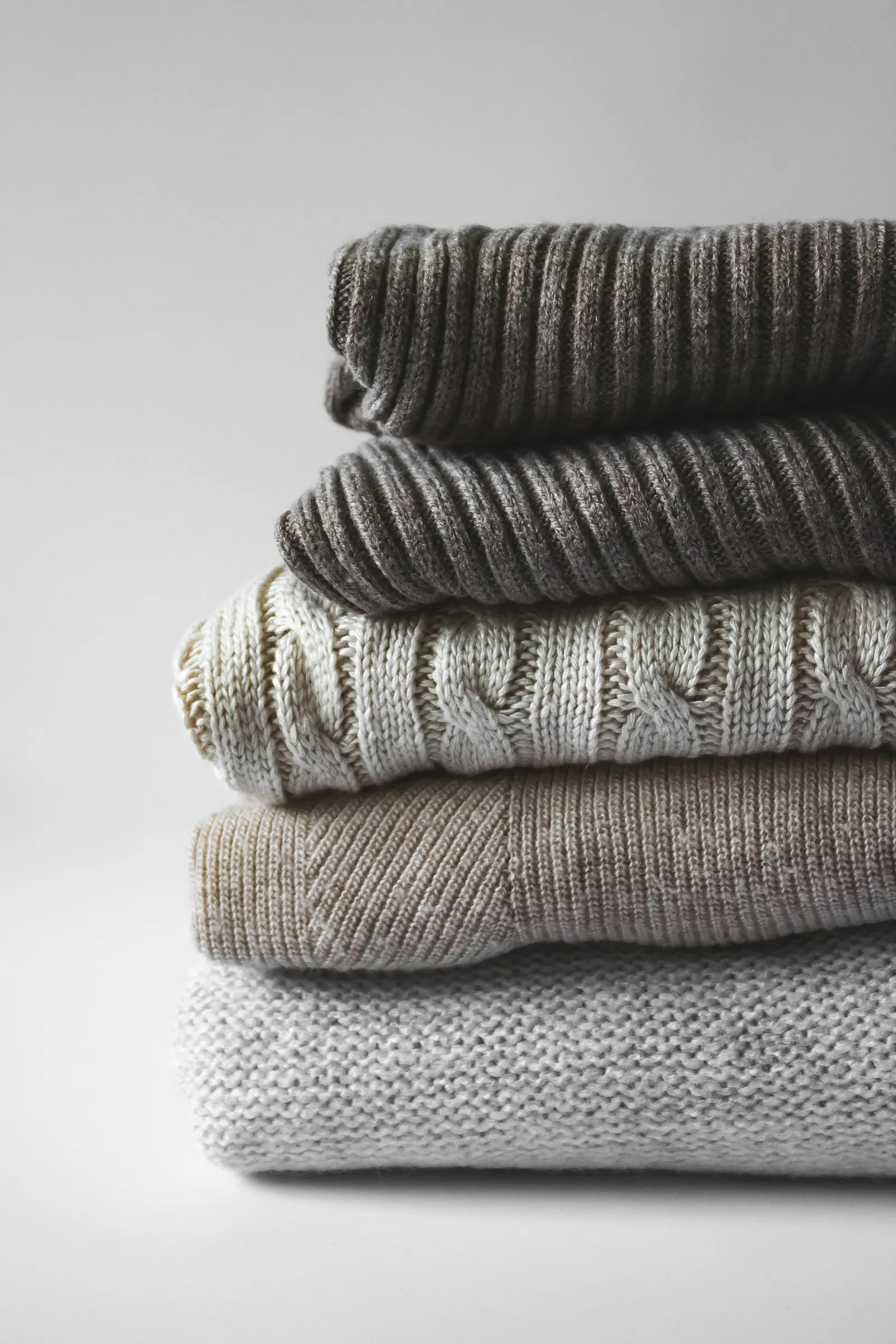
A hand-knit sweater can be a lovely find, and buyers often search for one specifically. But plenty of machine knits are made to look handmade, and some sweaters fall in between. Here’s how to tell, in the aisle, in a minute or two.
1. Look at the stitches
Hold the sweater flat and look closely at the front.
- Hand-knit: stitches are close in size but not identical. You’ll often see slight changes in tension, where a few rows look a little tighter or looser than the rest.
- Machine-knit: every stitch is the same size, row after row, with no wobble at all.
This is the most reliable single clue, but very skilled knitters can be remarkably even, so check the other signs too.
2. Turn it inside out and check the seams
Construction tells you a lot.
- Overlocked seams (edges wrapped in a dense zigzag of thread, often with cut edges inside) usually mean the sweater was cut and sewn from machine-knit fabric.
- Seams sewn together stitch by stitch, flat and neat, are common on hand-knits and on higher-quality machine knits.
- No side seams at all can mean it was knitted in the round. Many traditional yoke sweaters, including Nordic and Icelandic styles, are knitted this way by hand.
3. Check the edges and finishing
- Hand-knits often have small signs of handwork: yarn ends woven in on the inside, a slightly irregular cast-on or bind-off edge, buttonbands picked up by hand.
- Machine knits have very regular ribbing at cuffs and hems, and finishing that looks identical on both sleeves.
4. Read the labels
- Brand label, size tag and care label with a manufacturer or RN number suggest factory production.
- A handmade label, a personal name label or no labels at all are common on hand-knits, though labels can be removed or lost.
- “Hand-loomed” or “hand-framed” on a label usually means a hand-operated knitting machine was used. These are often well made and worth describing exactly as labeled.
5. Feel the fiber
Fiber matters to buyers as much as construction:
- Wool tends to feel springy and slightly textured, and holds its shape.
- Acrylic often feels softer at first and a little slippery or squeaky, and can pill into small, tight bobbles.
- Mohair and alpaca have a visible halo of fine fibers.
If there’s a content tag, trust that over touch. If there isn’t, say so in your listing rather than guessing.
6. Condition checks for any knit
Whether hand or machine made, check:
- Elbows, cuffs and underarms for thinning or felting.
- Moth holes, especially along the hem, cuffs and folds. Hold it up to the light.
- Pilling across the body and under the arms.
- Stretching at the neckline and cuffs.
- Smell, since wool holds onto smoke and storage odors.
What tends to affect value
Rather than “hand-knit equals valuable,” think about what buyers respond to:
- Fiber: natural fibers like wool, alpaca and mohair are often searched for specifically.
- Pattern and color: intricate colorwork, cables and traditional yokes tend to stand out.
- Condition: moth holes and heavy felting lower interest a lot.
- Size and fit: wearable modern sizes are usually easier to sell.
- Maker or origin: some regions and makers are sought after. Describe these only when the label or other evidence supports it.
Describing it in a listing
Be specific and honest:
Hand-knit wool cardigan with a Nordic-style yoke and wood buttons. Knitted in the round with no side seams. No labels. Light pilling under the arms, no holes. Pit to pit 21 in.
If you’re not sure, hedge: “appears hand-knit” or “likely hand-knit” is better than a confident claim a buyer could dispute. For measuring, see how to measure clothes for listings, and for wording condition, see condition terms explained.
Questions
Is a hand-knit sweater always worth more?
Not always. Fiber, pattern, condition and size matter as much as how it was made. A well-made machine-knit wool sweater from a sought-after maker can be worth more than a simple hand-knit in acrylic.
What does hand-loomed or hand-framed mean?
It usually means the sweater was knitted on a hand-operated knitting machine rather than by hand with needles or on an automated factory machine. It sits between the two: more even than hand-knitting, but still made with a lot of hands-on work.
How can I check if a sweater is wool without a tag?
In the store, rely on feel and look: wool tends to feel springy and slightly textured, and pills differently from acrylic. Without a fiber tag you can’t be certain, so describe it honestly when you list it, for example “feels like a wool blend, no content tag”.